Open this article in your favourite assistant
Get an instant summary, or save it as a source your AI can cite later.
- Couriers reject most weight disputes because of evidence format issues, not because you were factually wrong about the weight.
- The AWB number must appear visibly in every evidence photo — without it, couriers cannot link your proof to the shipment in their system.
- Volumetric disputes need three dimension photos with a tape measure in frame, not a scale photo. They are a different claim with different evidence.
- Delhivery, Bluedart, Shiprocket, and Ekart each have different dispute windows and channels. Using the wrong one loses the claim automatically.
- Evidence must show the sealed package at despatch. Post-delivery photos are rejected across every major courier.
- One certified parcel scale at the packing station, photographed on every shipment, is the single highest-leverage ops change for dispute success.
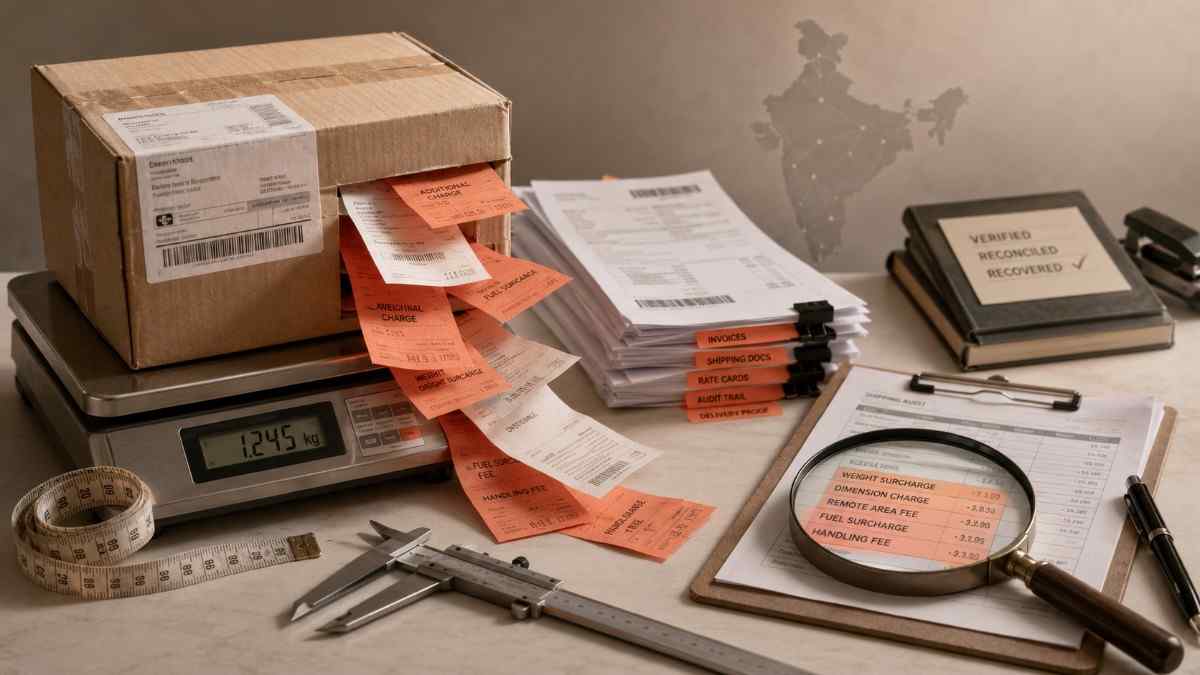
You get the courier invoice. You scan through it and spot it: a 1.2 kg order billed at 2.5 kg. You know it is wrong because you packed it yourself. You take a photo of the product next to your kitchen scale, raise a dispute on the portal, attach the photo, and wait.
Three days later: rejected. "Insufficient evidence."
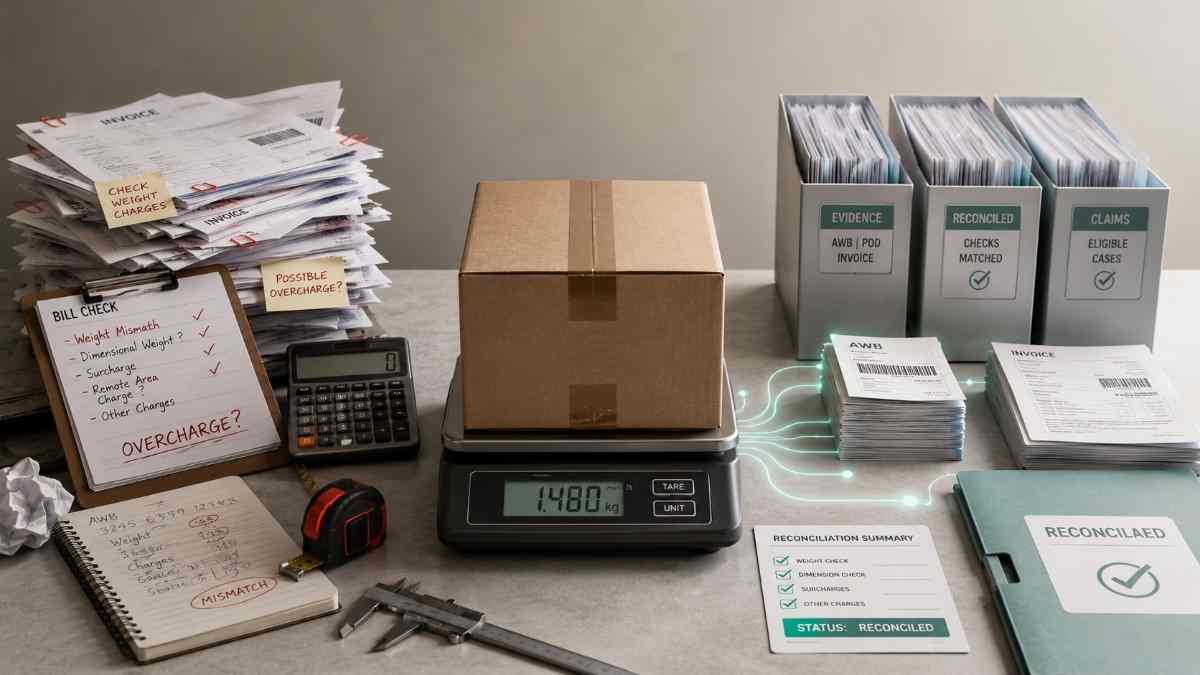
This is not unusual. Most weight dispute rejections in India have nothing to do with whether the brand was right or wrong. They happen because the evidence did not match what the courier's system actually requires. The product photo. The post-delivery unboxing shot. The bathroom scale. The photo without the AWB visible. All of them fail, every time, for reasons that are nowhere on the dispute form.
This post covers what each major Indian courier actually accepts as weight dispute evidence, what they consistently reject, and how to build a dispatch-side documentation process that stops your legitimate claims from getting binned on a technicality.
Why Disputes Get Rejected
Courier weight dispute systems are built to process claims at volume. They run on rules, not judgement. If your evidence does not fit the rule, it fails — even if the underlying facts would have won the claim.
Five rejection patterns come up consistently:
- No AWB visible in the photo. The courier's system cannot link a photo of "a box on a scale" to any specific shipment. The AWB barcode or tracking number in the frame is what creates that link. Without it, the evidence is inadmissible, full stop.
- Post-delivery photo. If you dispute a shipment that already delivered and your evidence is an unboxing photo or a product shot taken after delivery, it is rejected. Couriers only accept evidence of the package at despatch — the weight and dimensions as packed, not as unpacked.
- Uncalibrated scale. A kitchen scale, a bathroom scale, a postal scale without a calibration certificate — couriers reject all of these because they are not independently verifiable. The scale in the evidence photo must be certified.
- Wrong dispute channel. Raising a Delhivery dispute through a Shiprocket ticket, or emailing an account manager instead of logging a portal ticket, can mean the dispute never formally enters the tracking system. The window closes and the charge stands.
- Outside the dispute window. Most couriers allow 7 working days from the invoice date, not the delivery date. If you reconcile monthly, you will miss virtually every window regardless of how strong your evidence is.
The dispute window starts from the invoice date, not the delivery date. A charge raised on a Delhivery invoice 10 days after despatch may only leave you 7 days from that invoice date. If you reconcile monthly, the window is already gone before you find the charge.
Two Types of Dispute, Two Types of Evidence
Weight overcharges come from two different sources, and each needs different evidence to dispute.
Actual weight disputes
You declared 0.8 kg. The courier's hub scale read 1.5 kg. They billed 1.5 kg. You believe their hub scale is wrong.
This is an actual weight dispute. The evidence you need is a photo of the sealed, labelled parcel on a calibrated scale, showing the weight reading clearly, with the AWB barcode visible on the label in the same frame. Nothing more, nothing less.
Volumetric weight disputes
The courier applied volumetric weight because the parcel is bulky-light: the formula weight (L × W × H ÷ divisor) exceeded the actual weight, and they billed the higher figure. You dispute the dimensions they used to calculate it.
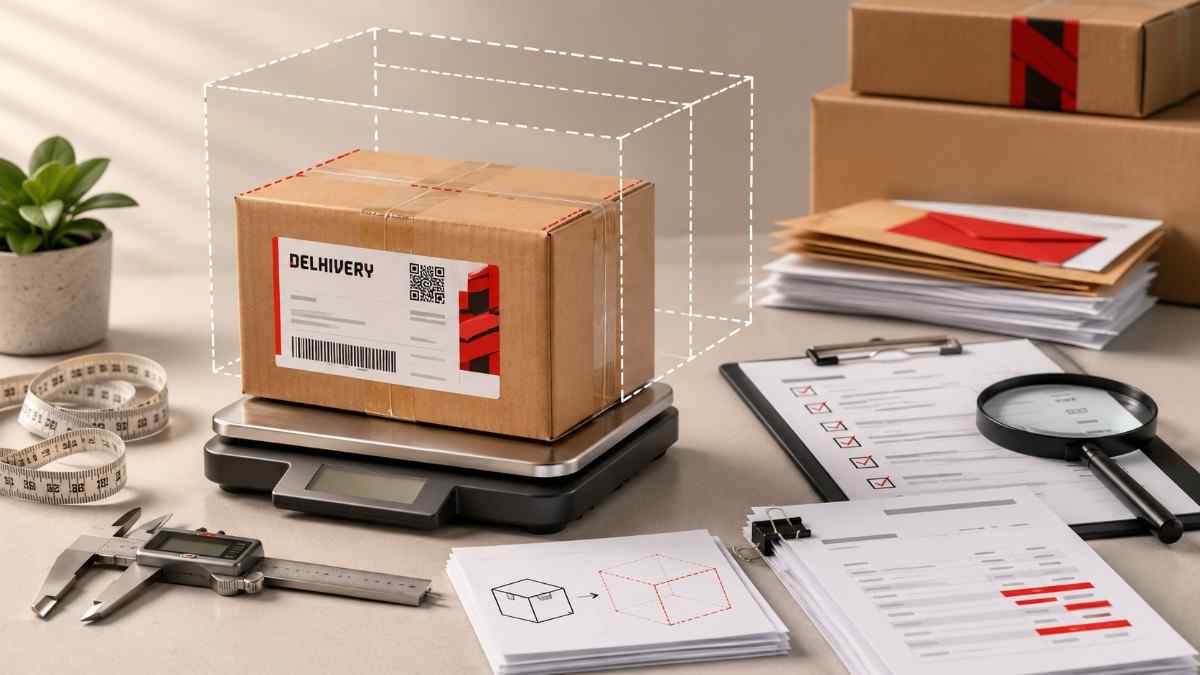
This needs dimensional evidence: photos of all three faces of the sealed package with a tape measure in frame. You are not proving the weight — you are proving the dimensions that go into the formula. A scale photo does nothing here.
| Dispute type | What you are claiming | Evidence required |
|---|---|---|
| Actual weight | Hub scale over-read the parcel | Sealed package on calibrated scale + AWB visible |
| Volumetric weight | Courier used wrong dimensions in formula | 3 dimension photos (L, W, H) + tape measure in frame + AWB visible |
| Slab rounding | Billed at next slab unfairly | Calibrated weight showing you are below the billed slab threshold |
Most brands only prepare for actual weight disputes and get blindsided by volumetric rejections. If your catalogue includes anything with a large box relative to its mass — apparel, footwear, homeware, electronics packaging — volumetric disputes will be the larger problem.
What Every Courier Wants: The Universal Standards
Across Delhivery, Bluedart, Ekart, Shiprocket, and XpressBees, there is a consistent core of what acceptable evidence looks like. Get these right and you are most of the way there regardless of which courier you are disputing with.
- AWB number visible in the photo. The airway bill number or barcode must be readable in the frame. This is the link between your evidence and the specific shipment in their system. No AWB, no linkage, claim rejected.
- Pre-despatch timing. Evidence must show the package as it was packed, before it left the warehouse. Any photo that could have been taken after delivery is rejected as unverifiable.
- Sealed package only. The product should be inside the packaging, completely sealed. An open box or unboxed product cannot prove what the sealed parcel weighed or measured.
- Certified scale. The scale in the photo must be certified — with a valid legal metrology calibration certificate. Domestic or uncertified postal scales are routinely rejected.
- Legible, high-resolution photo. Blurry photos where the scale reading or dimensions are not clear are rejected. Basic smartphone camera quality in decent light is sufficient.
A calibrated scale does not mean industrial or expensive. A digital parcel scale costing ₹3,000–5,000 with a calibration certificate from your nearest weights and measures inspector is sufficient for most couriers. The certification is what matters, not the price of the scale.
Per-Courier Evidence Guide
The universal standards are the baseline. Each courier adds its own requirements around submission channel, dispute window, and file format.
Delhivery
Delhivery handles direct disputes through the Delhivery Business Portal for brands on direct accounts, or via your Shiprocket or aggregator portal if you ship through an intermediary.
- Window: 7 days from the date the charge appears on the invoice.
- Channel: Business Portal → Dispute Management → Weight Discrepancy. Or via account manager for high-volume accounts.
- Accepts: Sealed package on certified scale (AWB visible), dimension photos with tape measure for volumetric disputes, video of the weighing process.
- Rejects: Post-delivery photos, uncertified scales, photos without AWB visible, disputes raised over email without a portal ticket.
- Volumetric divisor: 5,000. Formula: (L × W × H in cm) ÷ 5,000 = volumetric weight in kg.
Delhivery's hub reweigh typically happens at the origin processing centre within 24 hours of pickup. If you have CCTV or a packing video showing the sealed weight, that is stronger evidence than a still photo — Delhivery accepts video and tends to resolve video-backed disputes faster.
Shiprocket
Shiprocket is an aggregator, not a carrier. When you dispute on their platform, they escalate to the underlying carrier (Delhivery, Bluedart, Ekart, XpressBees) on your behalf. The evidence you submit to Shiprocket gets passed through to that carrier's review team.
- Window: 7 days from when the weight discrepancy deduction appears on the Shiprocket wallet statement.
- Channel: Shiprocket dashboard → Orders → select shipment → Raise Dispute → Weight Dispute. Portal only — email or chat submissions are not formal dispute records.
- Accepts: Same as the underlying carrier. Shiprocket's portal accepts JPG/PNG up to 5 MB per file.
- Note: Because Shiprocket is an intermediate layer, resolution typically takes 10 to 15 days from dispute date — longer than disputing directly with a carrier on a direct contract. Factor this into your cash-flow expectations when you raise disputes.
Bluedart
Bluedart has a more formal dispute process. The standard channel is via the assigned account manager or the Bluedart Express customer portal.
- Window: 7 working days from the AWB date (confirm with your account manager — this can vary by contract type).
- Channel: Email to account manager with a formal dispute reference number, or through the Bluedart portal if your account has portal access.
- Accepts: Sealed package on certified scale, AWB label visible, high-resolution photos. For volumetric: three dimension photos (L, W, H) with tape measure in frame. Bluedart uses a 5,000 divisor for surface shipments and 6,000 for air — verify which applies to your contract.
- Note: Bluedart in particular flags disputes where photos are clearly taken inside a customer's home. They assume post-delivery and reject immediately. Keep your packing area as the background — a warehouse or dispatch area setting helps.
Ekart / Flipkart
Ekart is primarily used for Flipkart marketplace fulfilment. Weight disputes go through the Flipkart Seller Hub rather than an Ekart portal directly.
- Window: 48 hours from when the weight discrepancy is flagged on the Flipkart seller account. The shortest window in Indian D2C logistics.
- Channel: Flipkart Seller Hub → Payments → Shipping Charges → Dispute.
- Accepts: Sealed package on certified scale with shipping label visible; dimensional evidence for volumetric disputes.
- Note: If you are not checking your Flipkart seller hub daily, you will miss most Ekart disputes before the 48-hour window closes. No exceptions on the window — the portal locks the claim automatically.
| Courier | Dispute window | Channel | Volumetric divisor |
|---|---|---|---|
| Delhivery | 7 days from invoice | Business Portal / account manager | 5,000 |
| Shiprocket | 7 days from wallet deduction | Shiprocket portal only | Carrier-dependent |
| Bluedart | 7 working days from AWB date | Account manager / portal | 5,000 (surface) / 6,000 (air) |
| Ekart / Flipkart | 48 hours from flag | Flipkart Seller Hub | 5,000 |
| XpressBees | 7 days from invoice | XpressBees portal / account manager | 5,000 |
Volumetric Disputes: The Evidence Is Different
Volumetric weight disputes are the ones most brands get wrong. They treat them like actual weight disputes and submit a scale photo. That is the wrong evidence for the wrong claim.
In a volumetric dispute, you are not claiming the courier's scale read wrong. You are claiming their dimensional scanner recorded the wrong box size. The evidence you need is photographic proof of your actual package dimensions.
The formula
Volumetric weight (kg) = (L × W × H in cm) ÷ 5,000

Example — same product, two different scanner readings:
Your box:      30 × 25 × 15 cm  =  11,250 ÷ 5,000  =  2.25 kg volumetric
Courier scan:  35 × 28 × 18 cm  =  17,640 ÷ 5,000  =  3.53 kg volumetric

Overcharge on one shipment: 1.28 kg × your per-kg rate card
If the courier's scanner read your box as 35 × 28 × 18 instead of 30 × 25 × 15, that error adds 1.28 kg to your billed weight per shipment. On a high-volume catalogue with bulky-light SKUs, this compounds fast.
What dimensional evidence looks like
Take three photos of the sealed package, one per dimension:
- Length photo: Tape measure running along the longest face of the sealed box. Measurement clearly readable. AWB label visible somewhere in the frame.
- Width photo: Tape measure on the shorter horizontal face. Measurement readable.
- Height photo: Tape measure running vertically on the side face. Measurement readable.
The courier's review team matches your photos against the dimensions their scanner recorded. If yours are smaller, you win the dispute. If your photos show the same dimensions their scanner found, you do not — but that is useful information too. It tells you the error was in your original weight declaration, not their scanner.
The 3-Photo Protocol: How to Document Every Shipment
The highest-leverage change a D2C ops team can make for weight dispute success is building evidence collection into the packing workflow. Not after-the-fact when a dispute comes in — systematically at despatch, for every shipment.
Three photos, taken in order, before the shipment leaves the packing station.
Photo 1: Sealed package on certified scale
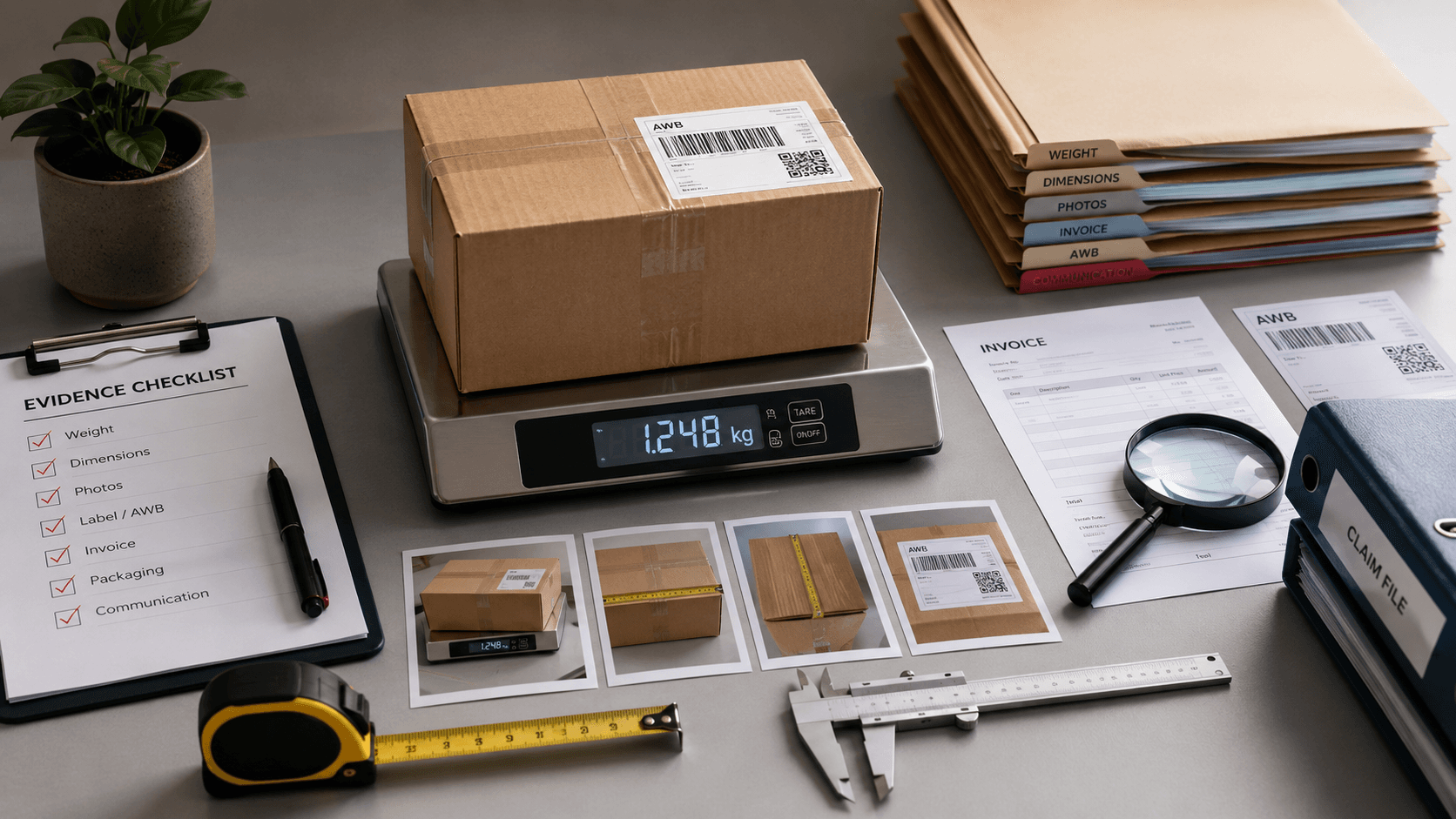
Place the sealed, labelled package on the certified parcel scale. Take one photo showing:
- The scale display reading clearly — e.g. 0.840 kg
- The AWB shipping label on the package, barcode visible and readable
- The whole package on the scale pan — do not crop the label or scale edges
If the scale has a certification sticker, angle the shot so it appears in frame. Bluedart in particular credits this during manual review of edge cases.
Photos 2 and 3: Dimensions (for bulky-light SKUs)
For SKUs where the box is large relative to product weight — apparel bags, shoe boxes, homeware, large electronics packaging — add dimension photos:
- Tape measure on the long face (length), reading visible
- Tape measure on the side face (height), reading visible
- Width photo if the box is not square and width differs significantly from length
For dense, small SKUs — jewellery, hardware, small cosmetics — skip the dimension photos. The actual weight is what matters and the volumetric formula is unlikely to produce a higher figure than actual weight anyway.
File naming and storage
Name each photo with the AWB number at the front: AWB1234567890_scale.jpg, AWB1234567890_length.jpg. Store in a folder organised by date. You need to retrieve these files within 7 days when a dispute comes in — not spend 45 minutes hunting through unlabelled photos.
For high-volume warehouses: mount a small shelf at a fixed height above the scale at the packing station. Staff place the package, take the photo — the framing is always the same. Consistent framing is faster to take and easier to audit later. A simple physical setup cuts per-shipment evidence time to about 10 seconds per parcel.
What about video?
Delhivery accepts video of the weighing process, and video is stronger evidence than photos because it is harder to dispute. A 15-second clip showing the empty scale zeroed, the package placed on it, the reading settling, and the AWB label in frame — this wins most Delhivery disputes at first review. For SKUs with a history of weight discrepancy disputes, the extra 15 seconds of video per shipment is a good trade.
When and Where to File the Dispute
Having the right evidence is necessary but not sufficient. Filing in the right place at the right time is the other half of a successful claim.
The timing problem
Dispute windows run from the invoice date, not the delivery date, and not the date you noticed the charge. For Delhivery and most couriers, that is 7 calendar days. For Ekart, 48 hours.
This means reconciliation must happen weekly, not monthly. A brand that audits courier invoices once a month will miss most of its dispute windows, every single month, regardless of how strong its evidence is. The evidence protocol and the reconciliation cadence have to work together.
Channel discipline
File through the right channel for each courier, every time. Using email when the portal is required means the dispute may never enter the formal tracking system. Using the portal when your contract requires account-manager escalation means it sits in a queue nobody reviews in time.
The first week you start disputing, confirm the correct channel with your account manager or Shiprocket support for each courier in your mix. Write it down in a shared ops doc. Disputes routed correctly resolve faster and at higher rates than disputes routed through workarounds.
What to include in every submission
- AWB number (mandatory in every case)
- Your declared weight at despatch
- The billed weight on the invoice
- The overcharge amount (billed weight minus your correct weight, multiplied by per-kg rate)
- Evidence photos, named with the AWB number
- Your invoice reference number
Keep the dispute submission under five lines of explanation. Courier dispute teams process hundreds of claims a day. A clear, factual submission — "AWB X, declared 0.84 kg, billed 1.5 kg, see attached scale photo" — gets processed faster than a detailed narrative. The evidence does the work; the text just frames it.
- Photo the sealed package on a certified scale before despatch
- Keep the AWB barcode visible in every evidence photo
- Take three dimension photos for volumetric-weight SKUs
- Submit through the courier's official portal or your aggregator's portal
- File within 7 days of invoice (48 hours for Ekart)
- Name evidence files with the AWB number for fast retrieval
- Use a kitchen, bathroom, or uncertified postal scale
- Submit photos where the AWB label is not visible or readable
- Send post-delivery or unboxing photos as evidence
- Submit a scale photo for a volumetric dispute — it is the wrong evidence
- Raise disputes via email or chat if a portal submission is required
- Wait more than a week to reconcile courier invoices
What Good Dispute Success Looks Like
There is no publicly audited benchmark for weight dispute success rates in Indian D2C, but from operator experience across the ecosystem, here is a working frame.
| Evidence quality | Typical success rate | Time to resolution |
|---|---|---|
| No evidence (narrative only) | Under 10% | Often rejected immediately |
| Post-delivery unboxing photo | 5–15% | Rejected in 1–3 days |
| Scale photo, AWB not visible | 10–25% | Rejected in 1–5 days |
| Certified scale + AWB visible (pre-despatch) | 50–70% | 5–12 working days |
| Full protocol: scale + dimensions + AWB + correct channel | 65–80% | 5–10 working days |
The remaining 20 to 35% of legitimate disputes that fail even with good evidence fall into a few buckets: cases where the hub scale genuinely read differently from the certified packing scale (both were technically correct at different moments), disputes slightly outside the window, and high-friction couriers where the review process heavily weights their own scanner data over external evidence.
For that last category, escalation to the account manager with a written dispute referencing contract terms is the next step. The win rate is not guaranteed, but it is meaningfully higher than accepting the charge silently.
Frequently Asked Questions
What evidence do couriers accept for weight disputes in India?
Pre-despatch photo of the sealed package on a calibrated scale, with the AWB shipping label visible in the frame. For volumetric disputes: three dimension photos (L, W, H) with a tape measure in frame. Evidence must be from before despatch, not after delivery.
Why do weight dispute claims get rejected?
Usually format reasons. AWB not visible in the photo, photo taken after delivery rather than at despatch, uncalibrated scale, wrong dispute channel, or outside the dispute window. The courier's system runs on rules — if evidence does not match the rule, it fails regardless of whether the underlying charge was wrong.
Does Delhivery accept packaging photos for weight disputes?
Yes. A photo of the sealed parcel on a certified scale with the AWB visible, submitted via the Delhivery Business Portal or account manager within 7 days of the invoice date. Video of the weighing process is also accepted and is generally stronger evidence.
What evidence does Shiprocket accept for weight disputes?
Same as the underlying carrier, since Shiprocket escalates to the carrier on your behalf. Submit through the Shiprocket portal within 7 days of the wallet deduction. Email and chat submissions are not formal dispute records and may time out.
Can I use my office or kitchen scale for a weight dispute?
No. Couriers require a certified scale — one with a valid calibration certificate from the legal metrology department. Kitchen, bathroom, or uncertified scales are rejected because they are not independently verifiable. A certified digital parcel scale costs around ₹3,000–5,000.
What is the dispute window for weight discrepancy claims?
Delhivery: 7 days from invoice date. Bluedart: 7 working days from AWB date. Shiprocket: 7 days from wallet deduction. Ekart / Flipkart: 48 hours from when the charge is flagged. Miss the window and the charge is final regardless of evidence quality.
How do I dispute a volumetric weight charge?
Three photos of the sealed package with a tape measure in frame, one per dimension (L, W, H), with the AWB visible in at least one shot. Most Indian couriers use 5,000 as the divisor: L × W × H in cm divided by 5,000 gives volumetric weight in kg. Submit the photos showing your measurements are smaller than the dimensions billed.
What is the success rate of weight dispute claims in India?
Brands with a full pre-despatch evidence protocol typically resolve 65 to 80% of legitimate disputes in their favour. Without pre-despatch documentation that drops to under 25%. The difference is almost entirely evidence quality, not whether the courier actually made an error.
Do I dispute with the courier or with my logistics aggregator?
If you ship via Shiprocket, Pickrr, or another aggregator, raise disputes on their portal and they escalate to the carrier. For direct contracts with Delhivery, Bluedart, Ekart, or others, go to that courier's portal or account manager. Using the wrong channel can push you past the dispute window before anyone sees your claim.
The Short Version
Most weight dispute rejections are not about whether you were right. They are about whether your evidence met the courier's specific format requirements. The AWB in frame, the pre-despatch timing, the certified scale, the correct submission channel — these are the rules the system runs on, and they apply regardless of how obviously wrong the billed weight was.
Build the evidence at despatch, before the shipment leaves, for every package. Three photos takes about 30 seconds per shipment. When a dispute comes in — and it will — the evidence exists and the claim stands on merit instead of getting rejected on a technicality.
For teams reconciling hundreds or thousands of shipments a month, OneflowAI handles the invoice matching and dispute filing end to end — including pulling the right despatch evidence when a claim comes in. But the 3-photo protocol is something any warehouse can start tomorrow with a certified scale and a phone.
- Delhivery Business Portal — Weight Dispute Submission Guidelines
- Shiprocket Help Centre — Weight Discrepancy and Dispute Process
- Bluedart Express — Customer Service and Dispute Resolution Process
- Flipkart Seller Hub — Shipping Charge Dispute Documentation
- Ministry of Consumer Affairs — Legal Metrology Act, Weights and Measures Calibration Requirements
- XpressBees Seller Support — Dispute Filing Guidelines

Omkar Kamble builds OneflowAI, which shows consumer brands what every order really earned after RTO, freight and COD. These guides come from real order and courier data, not theory. Figures we cannot independently verify are flagged.
Published 29 June 2026 Last reviewed 29 June 2026 11 min read