Practical notes on ecommerce reconciliation, recovery and back-office operations.
24 posts
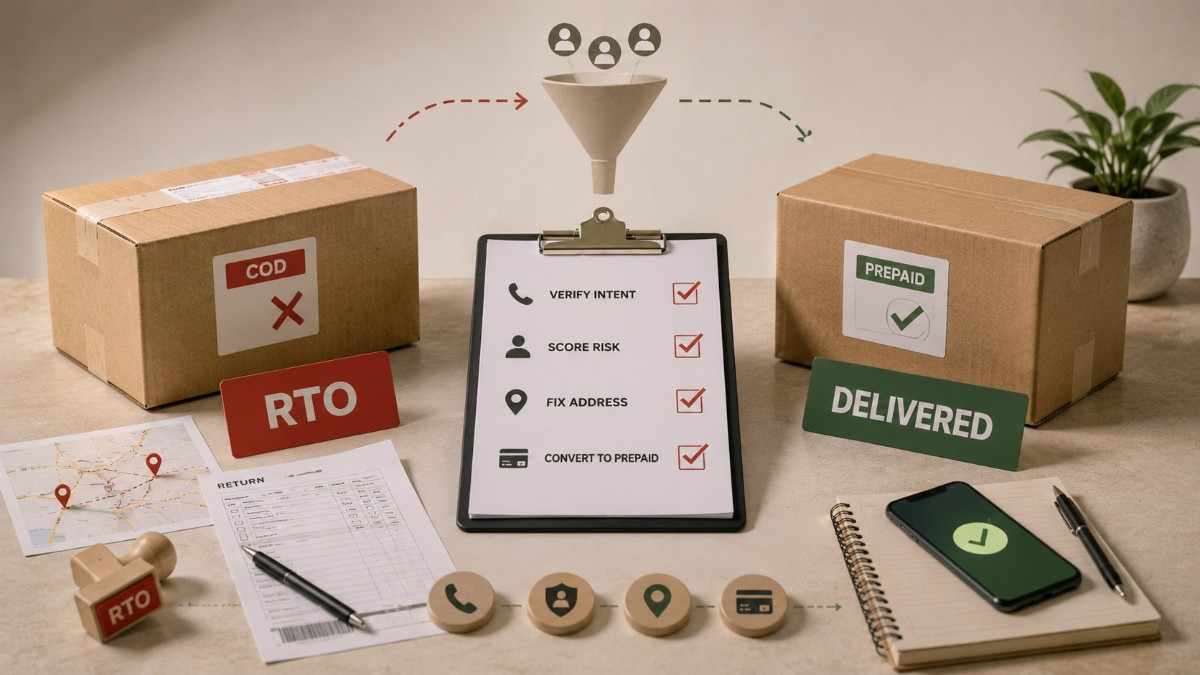
COD orders return at 20 to 40% in India versus under 2% for prepaid. A working playbook to reduce RTO for COD orders: verify intent, score risk, fix addresses, and convert the right buyers to prepaid.
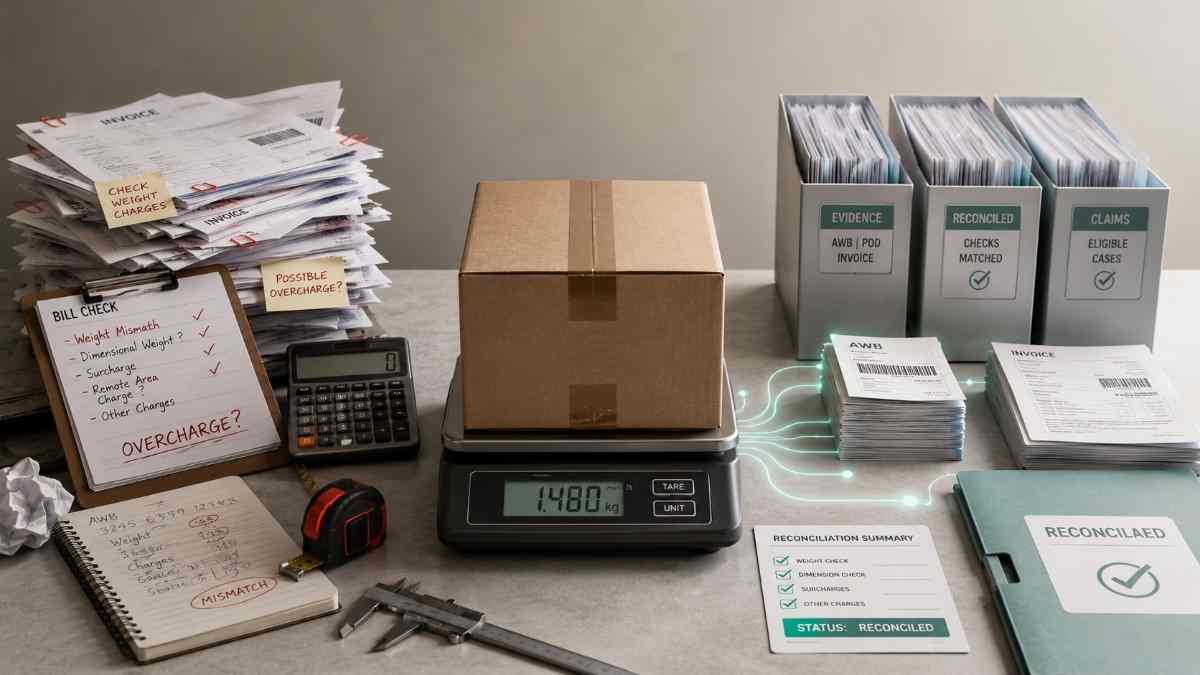
Manual courier reconciliation catches maybe half your overcharges and misses every systematic billing error. Here is what changes when you automate — and how to run the switch without breaking your ops.
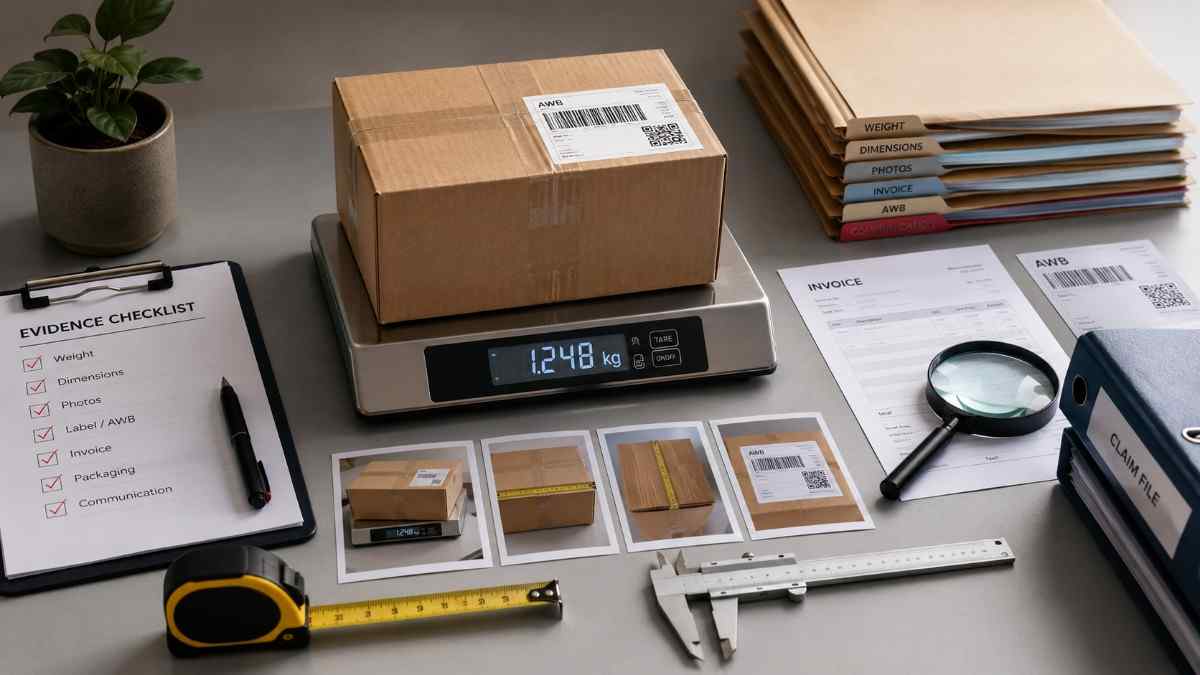
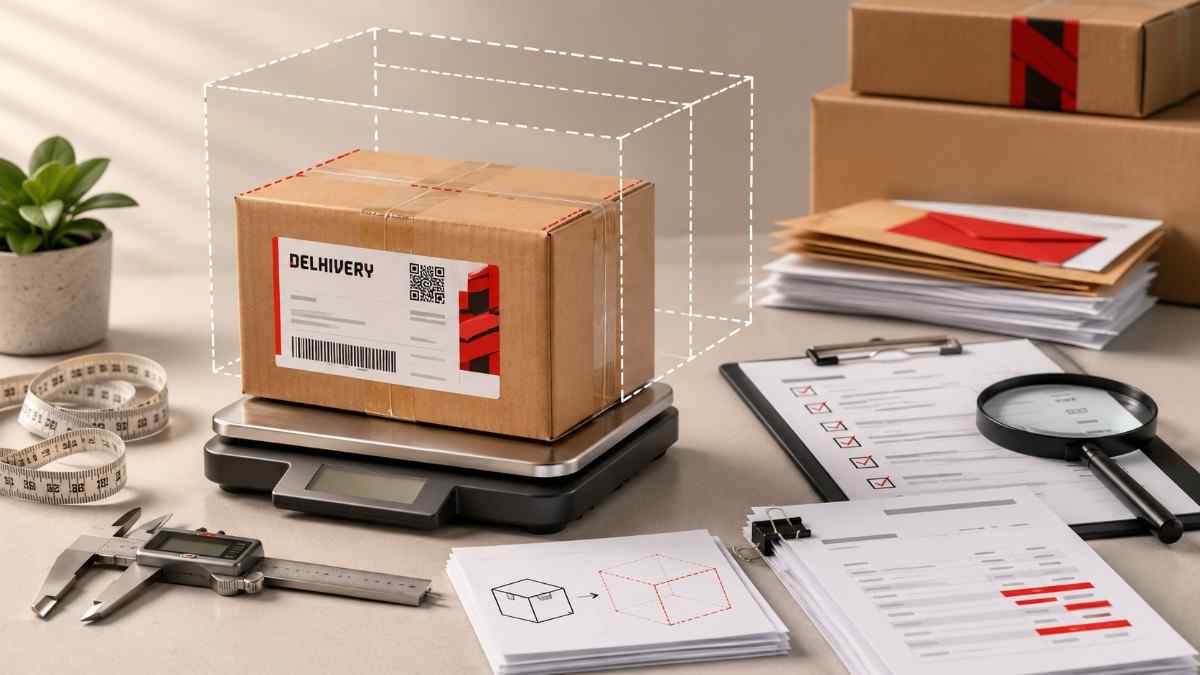
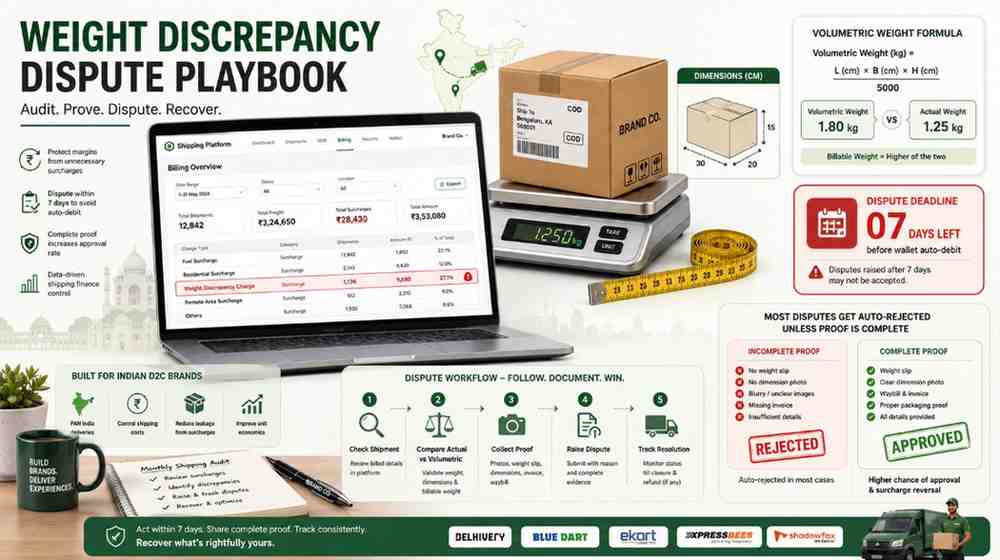
Most weight dispute rejections have nothing to do with whether you were right. This is the evidence format each major Indian courier actually accepts, and how to build it at dispatch.
How much Indian D2C brands lose to shipping overcharges, where the leakage hides, and a simple model to estimate your own shipping cost leakage.
A seller playbook for the Delhivery weight dispute: the exact Delhivery One claim steps, the evidence that wins, and how to stop overcharges.
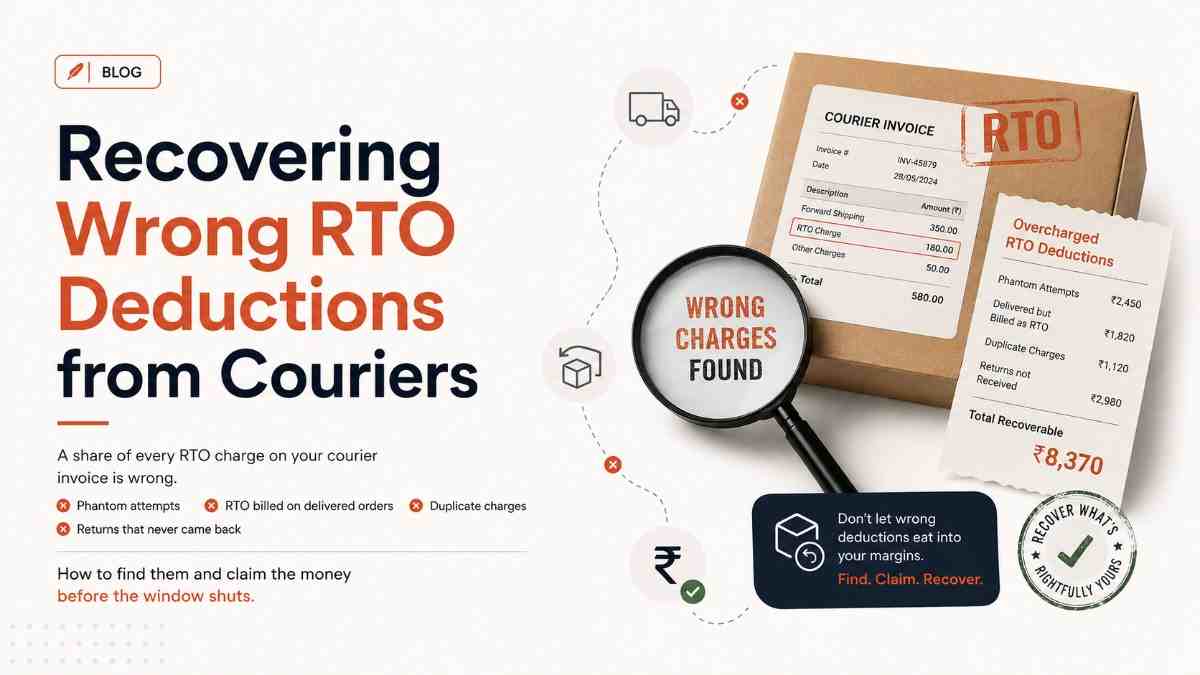
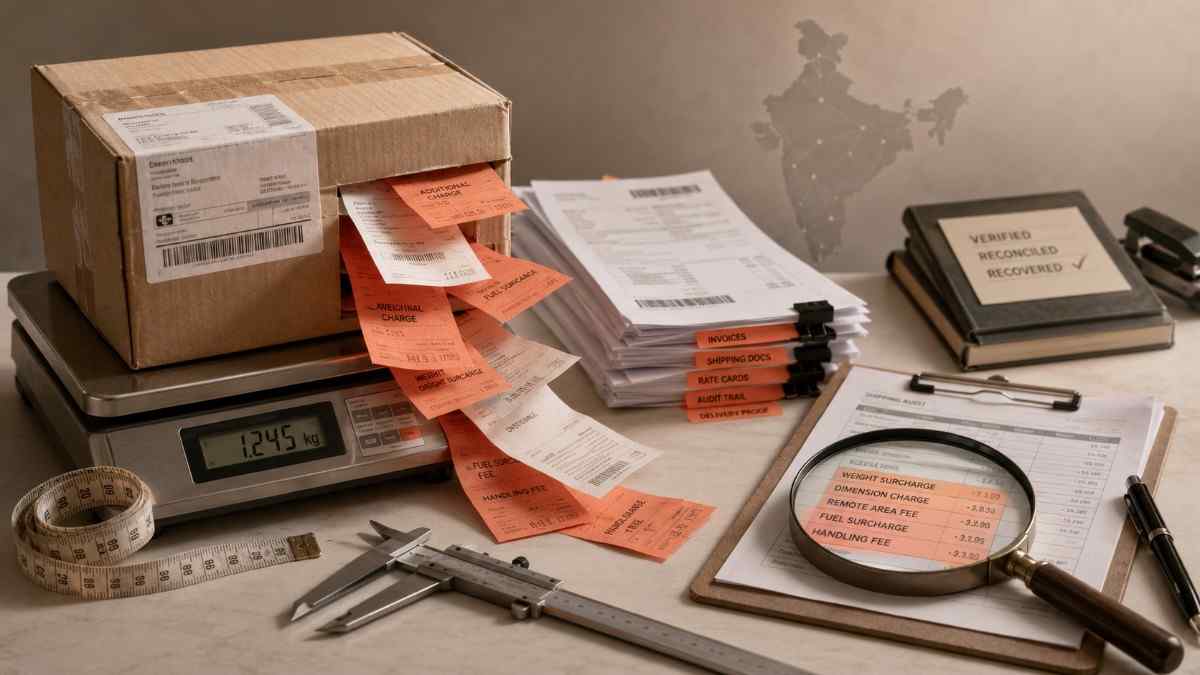
What a courier invoice audit catches (fuel, remote-area, weight, zone, GST, missed refunds) and how to run one to recover hidden D2C shipping overcharges.
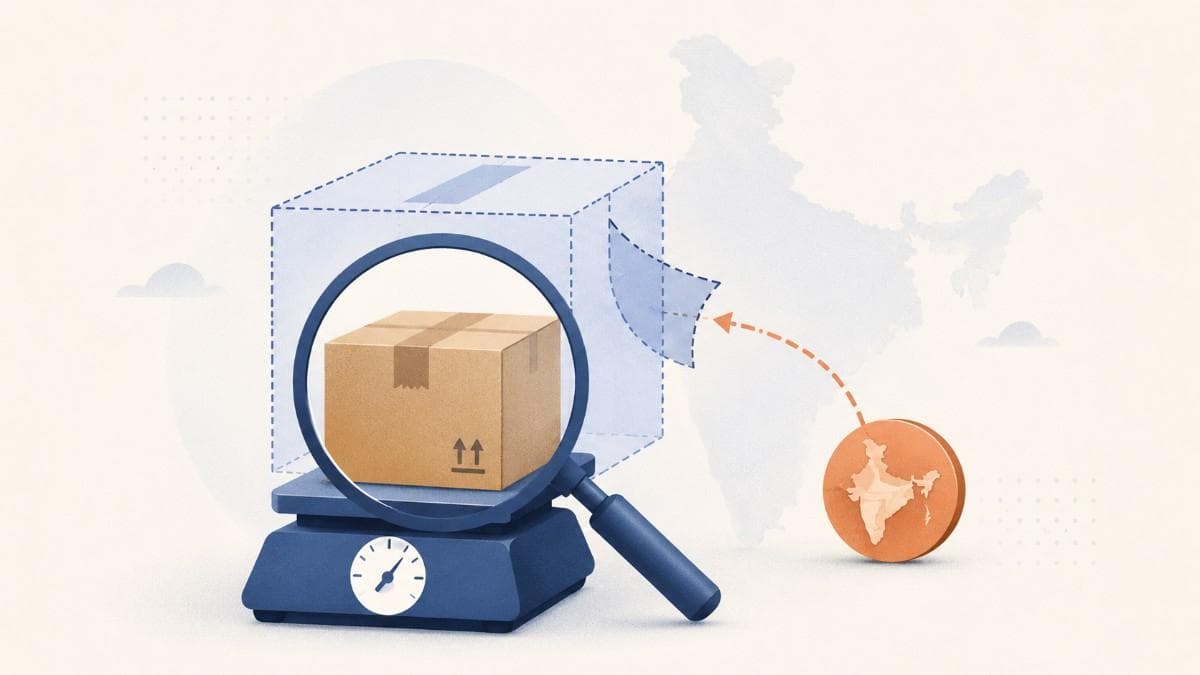
How volumetric weight is calculated in India, why it inflates your courier bill, and a worked example of what bulky-light D2C parcels overpay.
A finance-led playbook to recover courier weight discrepancy and billing overcharges in India: audit invoices, prove the error, dispute in-window, and get the money back.
Why Shiprocket charges weight discrepancies, why disputes auto-reject after 7 days, and a step-by-step playbook to dispute them and recover your wallet.
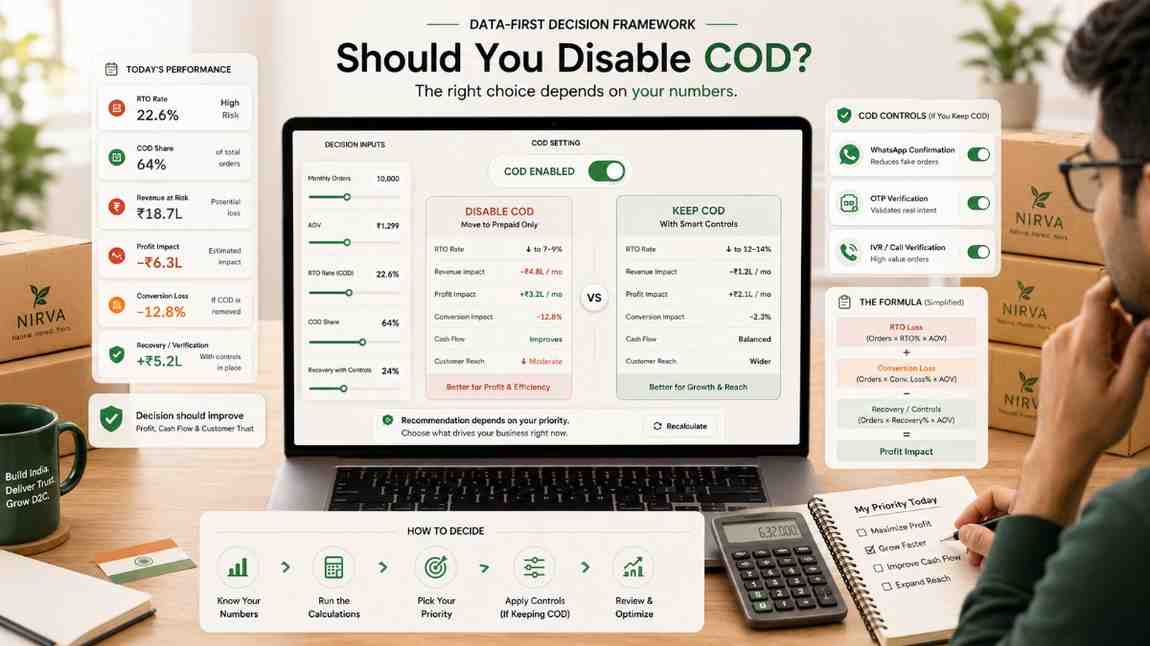
A calculator-style framework for Indian D2C founders weighing whether to disable cash on delivery. Run the numbers on your own RTO rate, revenue risk, and COD controls before touching the toggle.
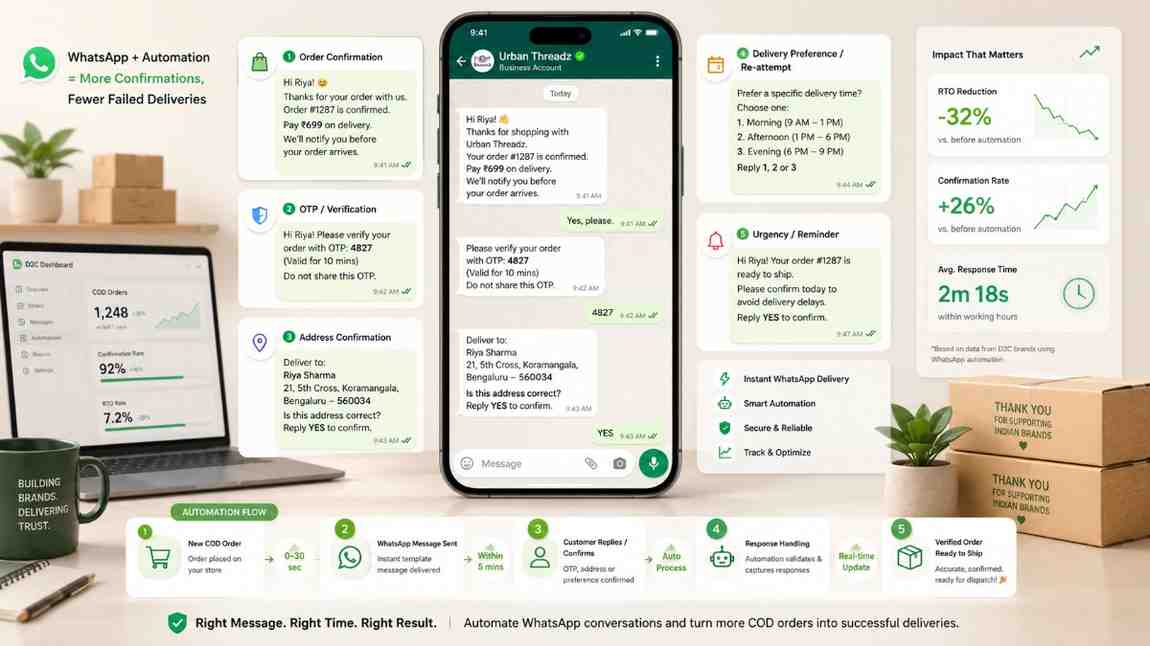
5 copy-paste WhatsApp COD verification templates for Indian D2C brands, plus the full automation flow, timing guidance, response handling, and benchmarks for RTO reduction.
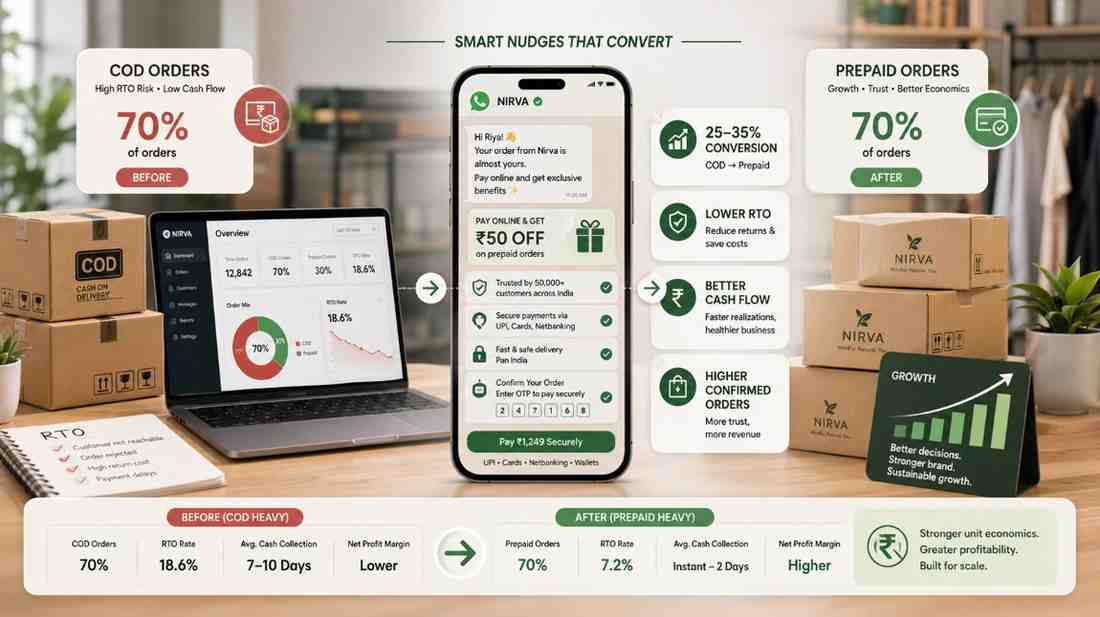
GoKwik shifted one brand from 70% COD to 65% prepaid. BeePragma sees 12–15% of COD orders flip to prepaid with the right nudge. Here is exactly how the conversion playbook works.
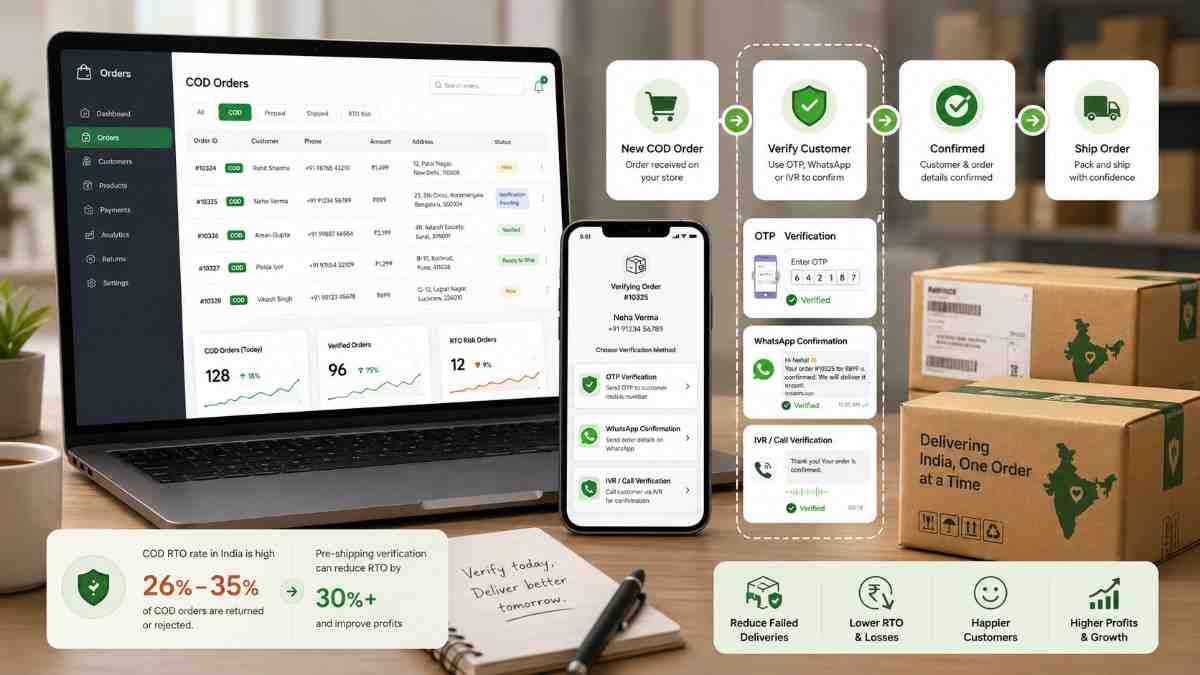
Shopify killed the Advanced COD app. COD RTO rates are running at 26–35% across Indian D2C. Here is exactly how to set up COD order verification, OTP, WhatsApp, IVR, and which approach works for your order volume.
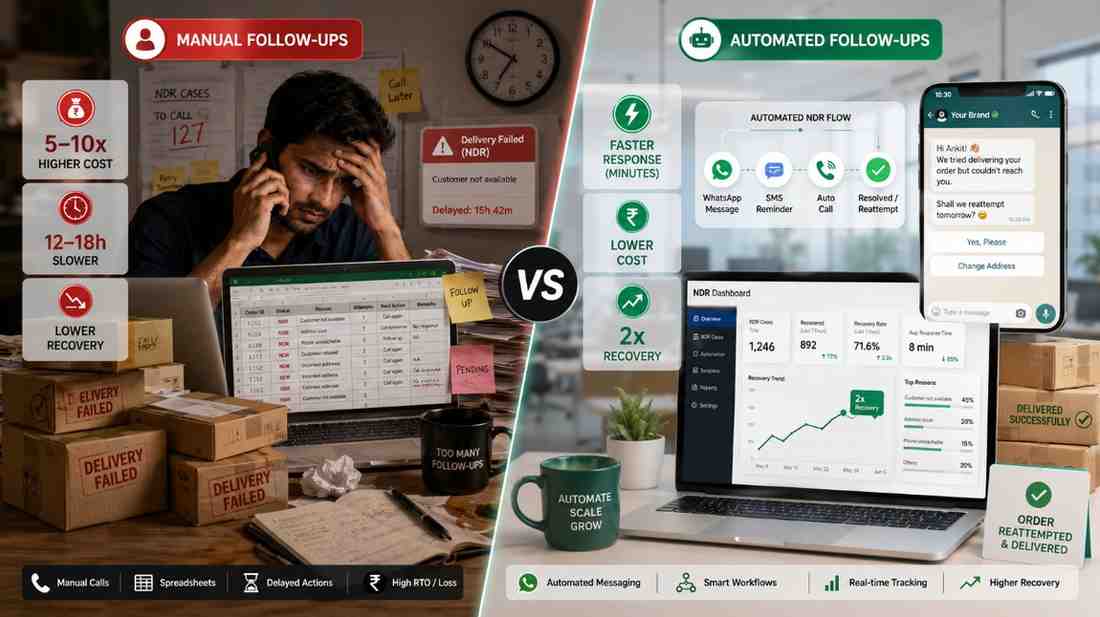
Manual NDR follow-up costs 5–10x more per resolution, responds 12–18 hours too late, and recovers half as many shipments. Here is the full comparison with actual numbers.
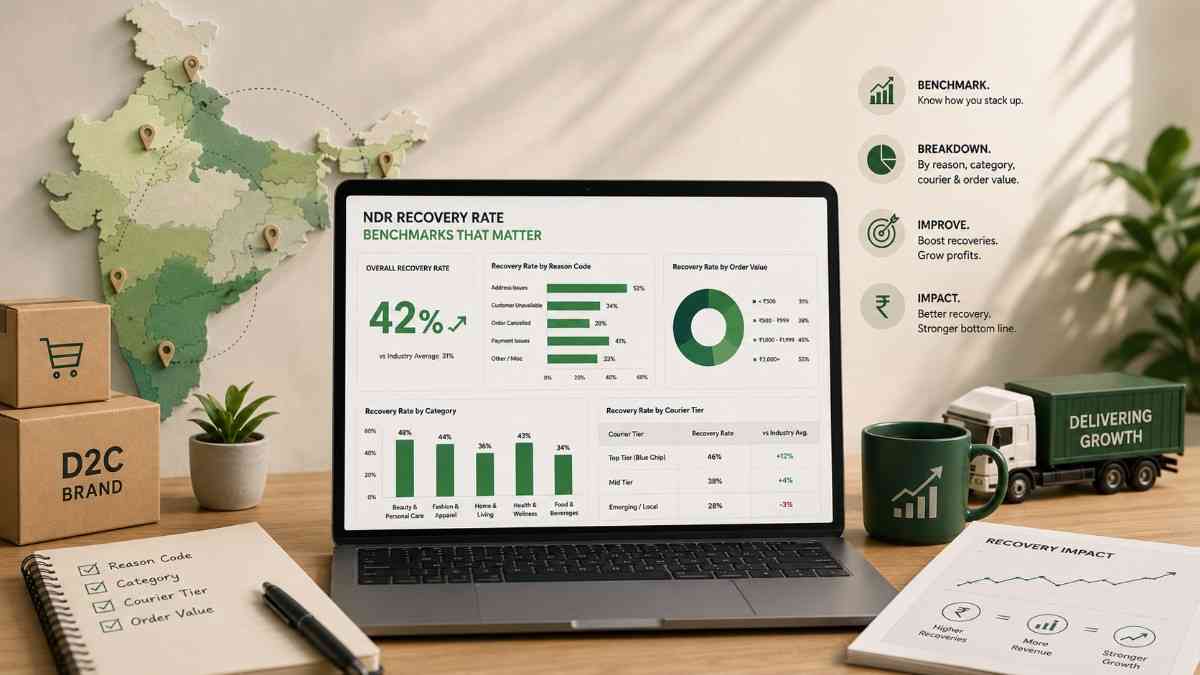
Most Indian D2C brands have no idea whether their NDR recovery rate is good, bad, or industry-average. Here are the actual benchmarks, by reason code, category, courier tier, and order value, so you can compare yourself.
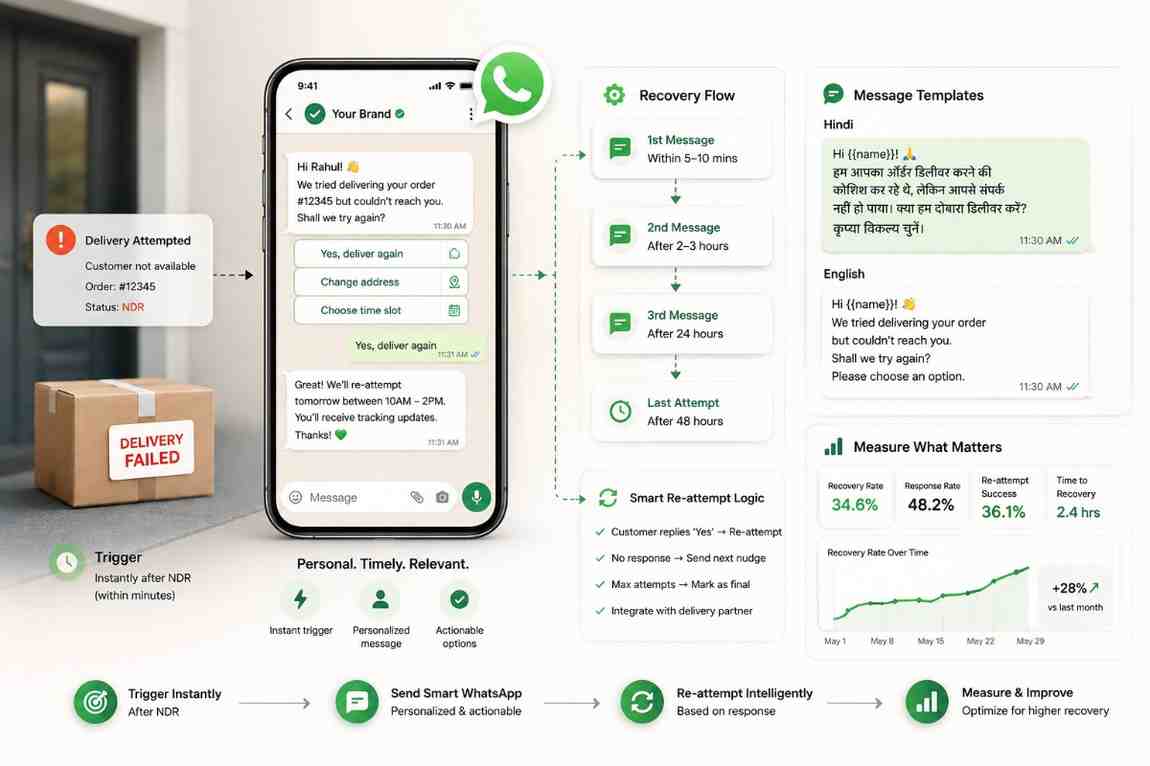
Most brands send one generic WhatsApp after a failed delivery and call it NDR management. That is not recovery. Here is the actual setup: trigger timing, message templates in Hindi and English, re-attempt logic, and how to measure whether any of it is working.
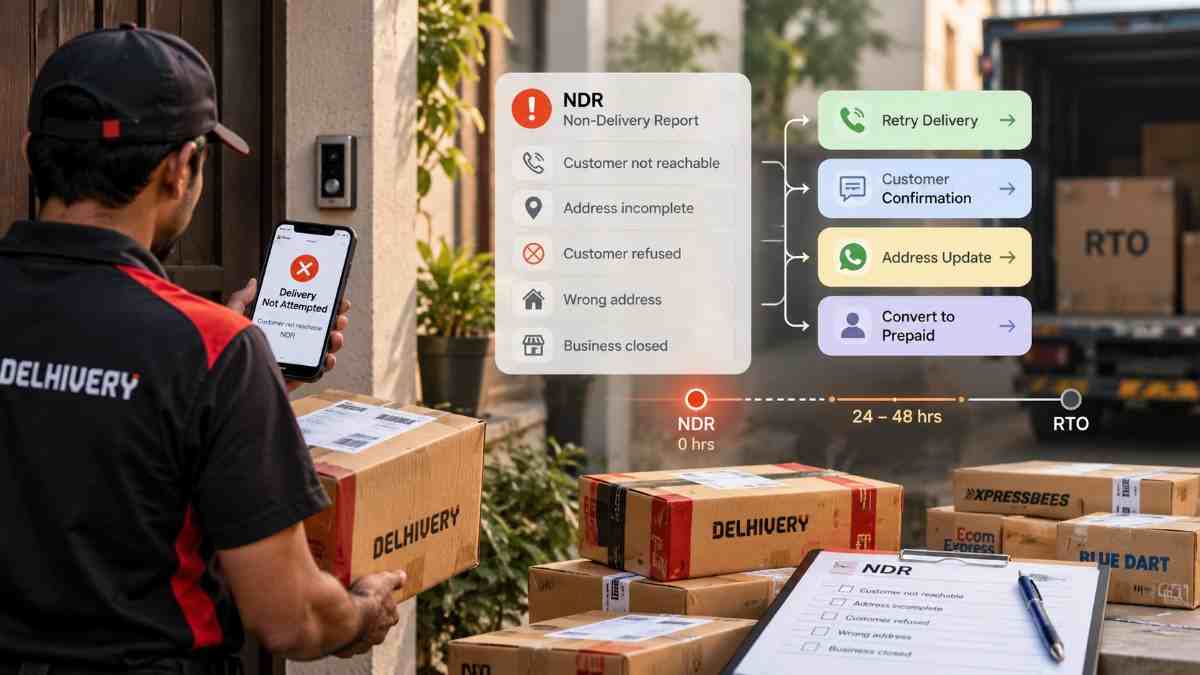
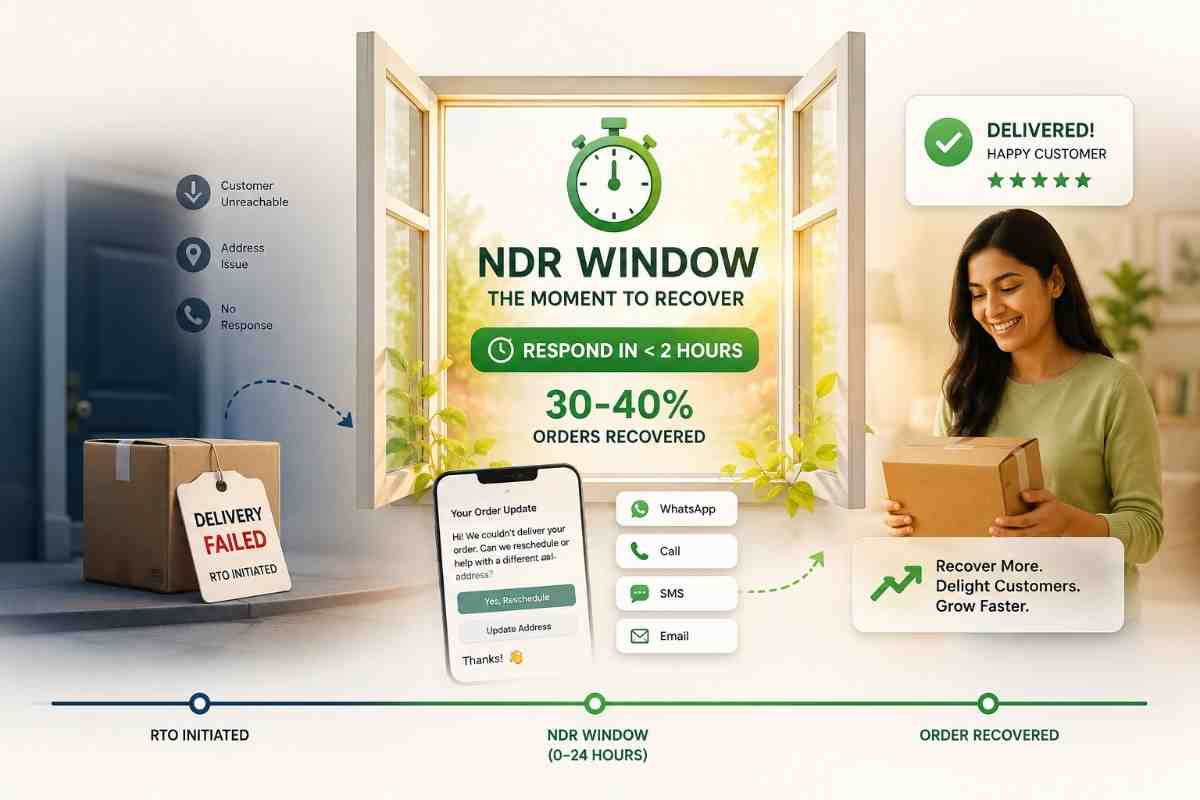
NDR is the only window between a failed delivery and a permanent RTO. Brands that respond in under two hours recover 30 to 40% of those orders. Brands that wait a day recover under 10%. Here is the full playbook for closing that gap.
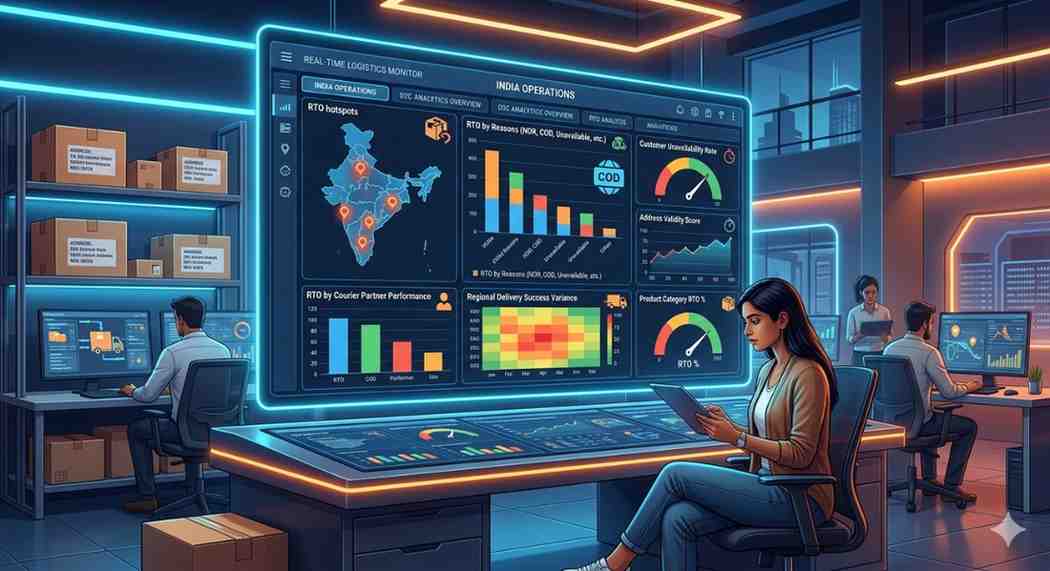
Most Shopify dashboards show one RTO number. That single percentage hides where the problem actually is. Here are the seven metrics that separate brands running under 15% RTO from those stuck at 30%, and how to track them daily.
80% of Indian addresses are written around landmarks, not street numbers. 20–30% of pincodes entered at checkout are wrong. Here is what good address validation looks like and how to implement it without rebuilding your checkout.
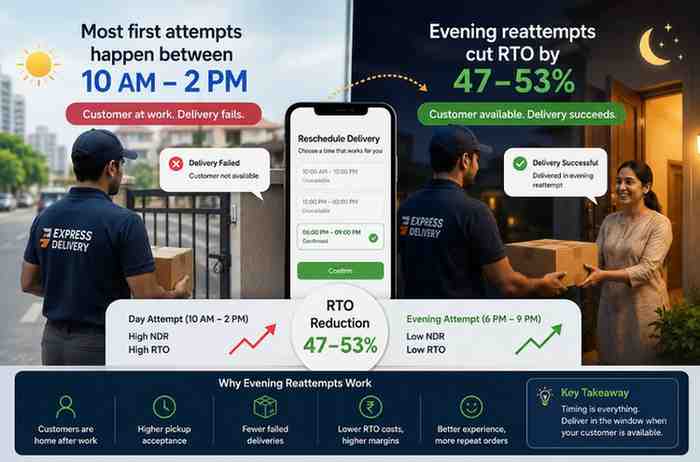
Most Indian couriers attempt first delivery between 10am and 2pm. Your customer is at work. Here is why rescheduling to evening cuts RTO by nearly half.
India averages 26% COD RTO. At 3,000 orders a month, that is ₹4 lakh lost to returns. 10 proven ways to reduce COD returns for Indian D2C brands.
Fashion brands bleed 30-40% RTO on COD. Beauty brands run at 12-18%. Electronics sits around 27%. Same Shopify setup, same courier. The gap is not operational. It is structural. Here is what drives it and what to do about it.
A Shopify brand doing 5,000 COD orders a month at 28% RTO is bleeding over ₹7 lakh every month, before touching margins. Here is the complete breakdown of why Indian RTO is so high, what it actually costs, and nine tactics that move the number down.
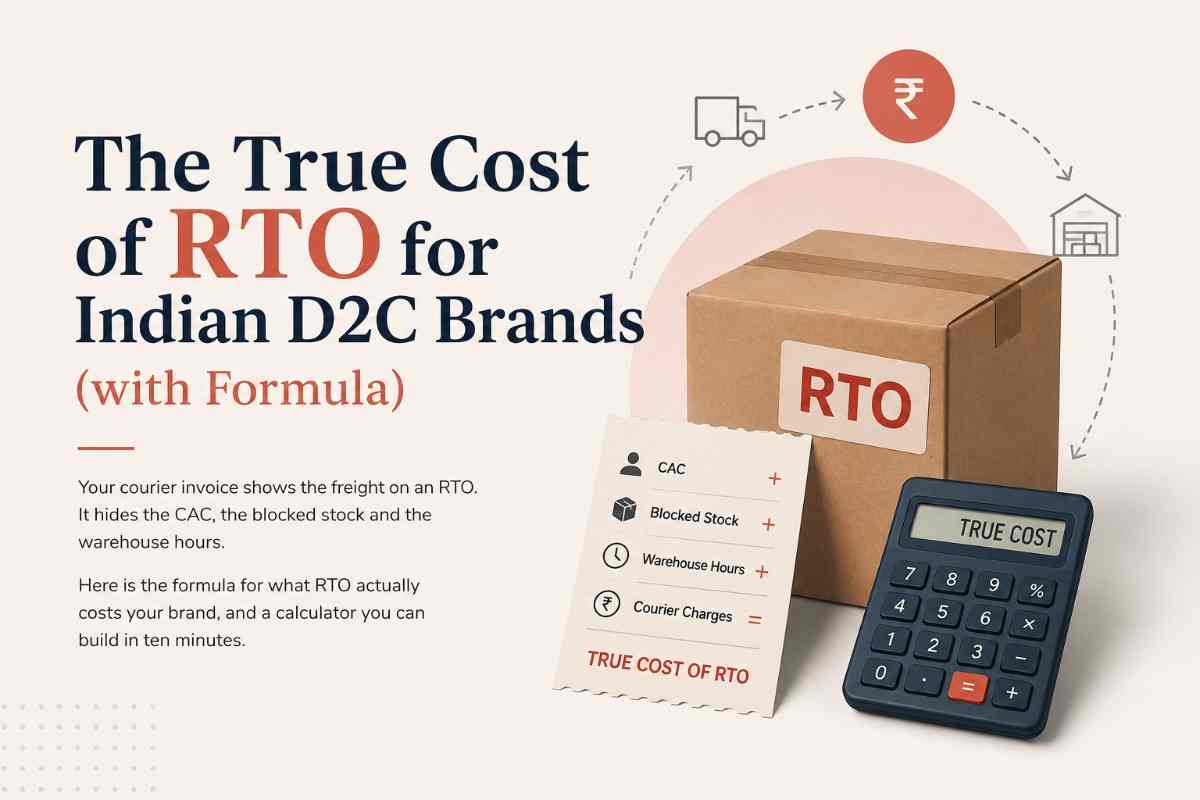
Most D2C brands think an RTO costs them ₹200. Add up forward shipping, gateway fees, packaging, labor, unsellable inventory, and wasted CAC: the real number is closer to ₹450. Here is what the math actually looks like.